
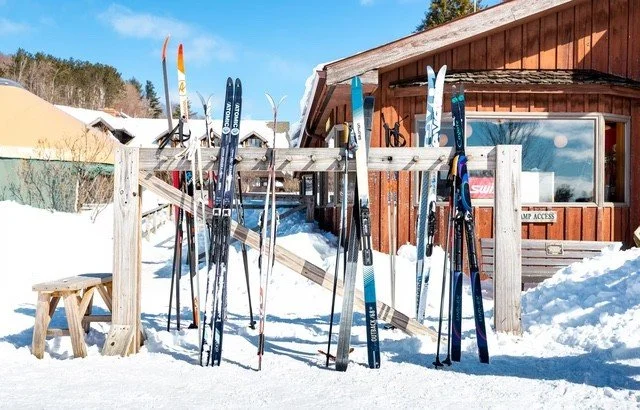
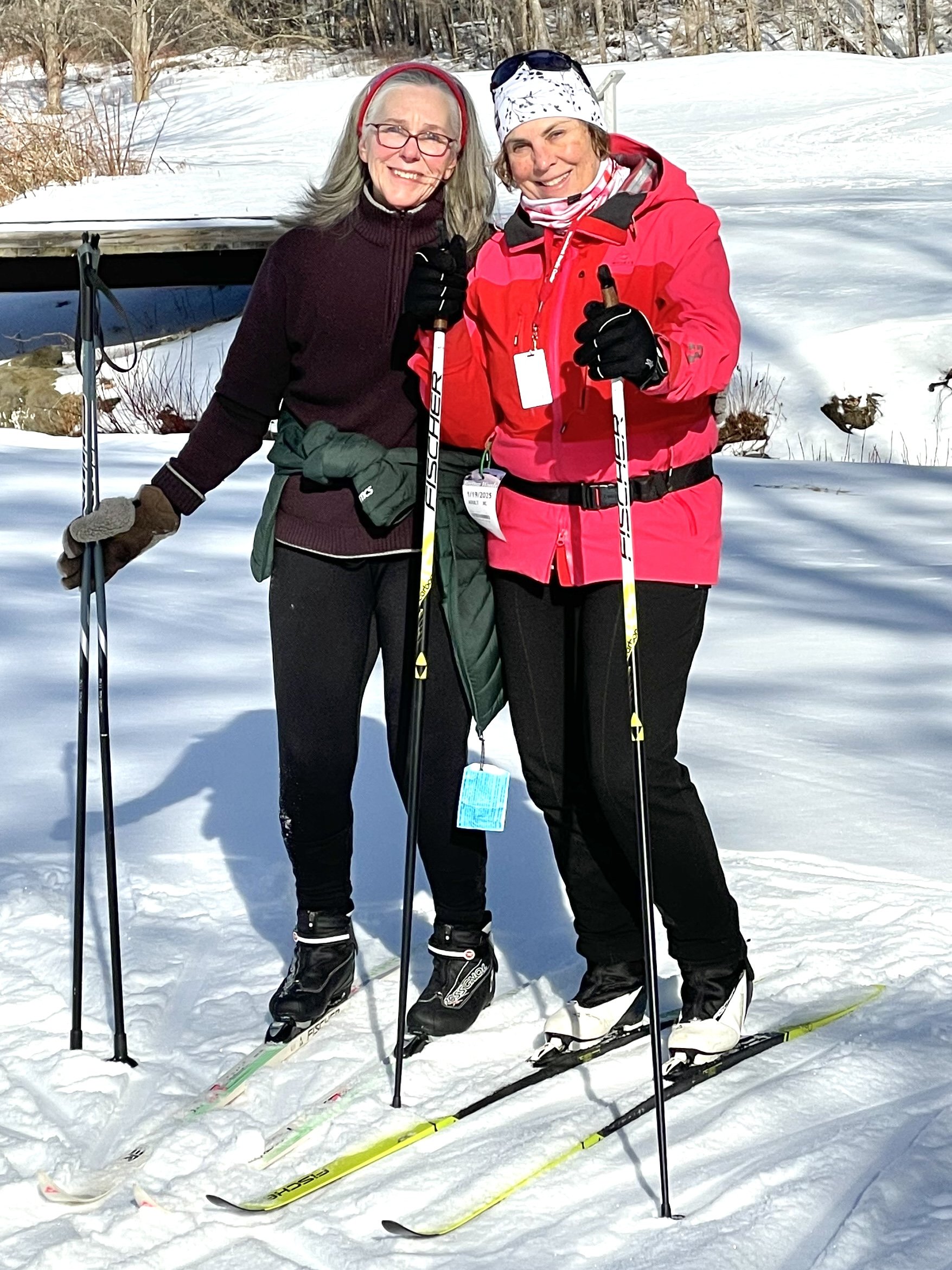
Kathy and Kimberly have improved their skiing at Woodstock Nordic Center with their new XC skis
On a recent trip to Woodstock Nordic Center in Vermont, the freezing temps had kept the tracks in pristine shape, no thaw and freeze cycle. Everyone was zipping along and not just the speedy skate skiers, but I wasn’t really going anywhere very fast. It clearly wasn’t me, it was the equipment. Perhaps it was time for an upgrade.
The attentive salesperson at the center retail shop walked me through the options. The XC ski landscape has changed a lot in the 17 years I last got XC skis, so I sought out advice from Nordic guru Roger Lohr, founder and editor of XCSkiResorts.com and a regular contributor to other media outlets.
For new skis, I wanted: mostly track skiing, and while I was not out to do the Birkebeiner, I wanted good downhill control. Here is what I learned.
You essentially choose XC skis based on your weight, not height, with the ability to press one foot down efficiently one at a time on the cambered ski for grip and glide. XC ski supply companies offer an ideal weight ranges for the ski length. They will even put you on a color-coded scale. Voila. That is what you go by.
Some brands such as Atomic, have a flex and camber rating with a choice of soft (entire ski makes contact on snow more easily, providing grip and easy control but can feel slow); medium (good for easy handling and decent speed); hard (stable, stiff for speed, has a strong camber that keeps the grip zone off the snow when you are not actively kicking). Ratings are marked on the ski.
Length does still play a part. If you are a more experienced skier and you are at the highest end of the weight range, you could bump into the next length range (measured in centimeters).
You may need more than one model of skis. Many XC skiers balance the desire for speed and efficiency at Nordic centers’ tracked trails with the ability to go downhill and hold a snowplow on hard snow. General touring skis (wider, softer shorter skis with metal edges have become popular for stability on downhills, and for backcountry, but you substantially lose the glide on tracked trails.
Use the classic paper test, advises Lohr. That is a method that matches a Nordic ski’s flex to your body weight to ensure efficient grip and glide. On a hard floor, stand on the skis with the ball of your foot at the balance point so your weight evenly distributed. Have a friend slide a piece of paper under the middle camber/grip zone. It should slide under. Now load weight onto one foot and the paper should stay put.
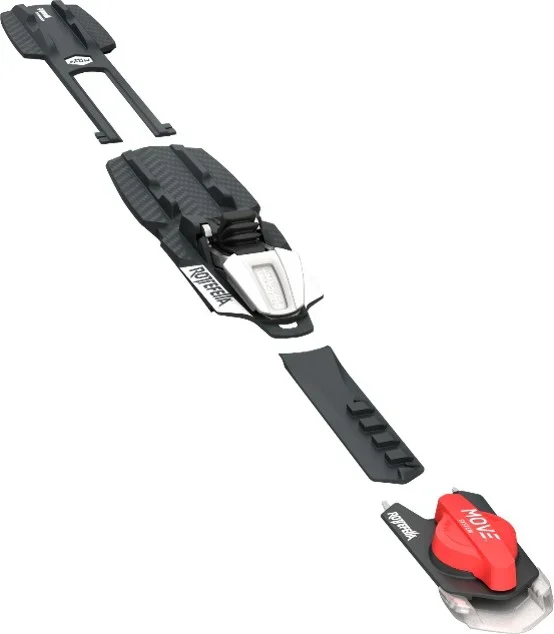
Move XC Ski Binding
Bindings are another buying decision. Most recreational XC skis now have a standard NNN (New Nordic Norm) boot and binding system. But Rottefella introduced the new “move” binding system to redistribute your weight for different terrain and conditions. The Move Switch is a dial you can turn while you are skiing to slide the binding backward and shift your weight to the rear to improve glide on a slow snow day or slide the binding forward to achieve more grip for uphill climbing to prevent sliding backwards. The Turnamic binding can also be adjusted but does not have the Move Switch.
Besides the right equipment, there are other tips you can follow to ski fast-ish (improve your efficient glide), preserve energy, and keep a comfortable cadence. If Lohr is not gliding more than a foot, he stops to take off the skis and apply liquid F4 glide wax to the ski base tips and tails to increase glide efficiency.
Longer ski poles are helpful and it is suggested that the pole be planted so it is closer to your elbow versus reaching out and trying to catch up to it. Watch youtube re-runs of Olympic skiers at Cortina.
Feel your body weight go down on your heel and shift weight from one side to the other side. On the forward sliding ski, bend your knee somewhat, feel the heel and line up toe, knee, nose on one side and then move the other leg and ski forward to line up on the other, Lohr advises. Try to stay upright and not bend at the hips
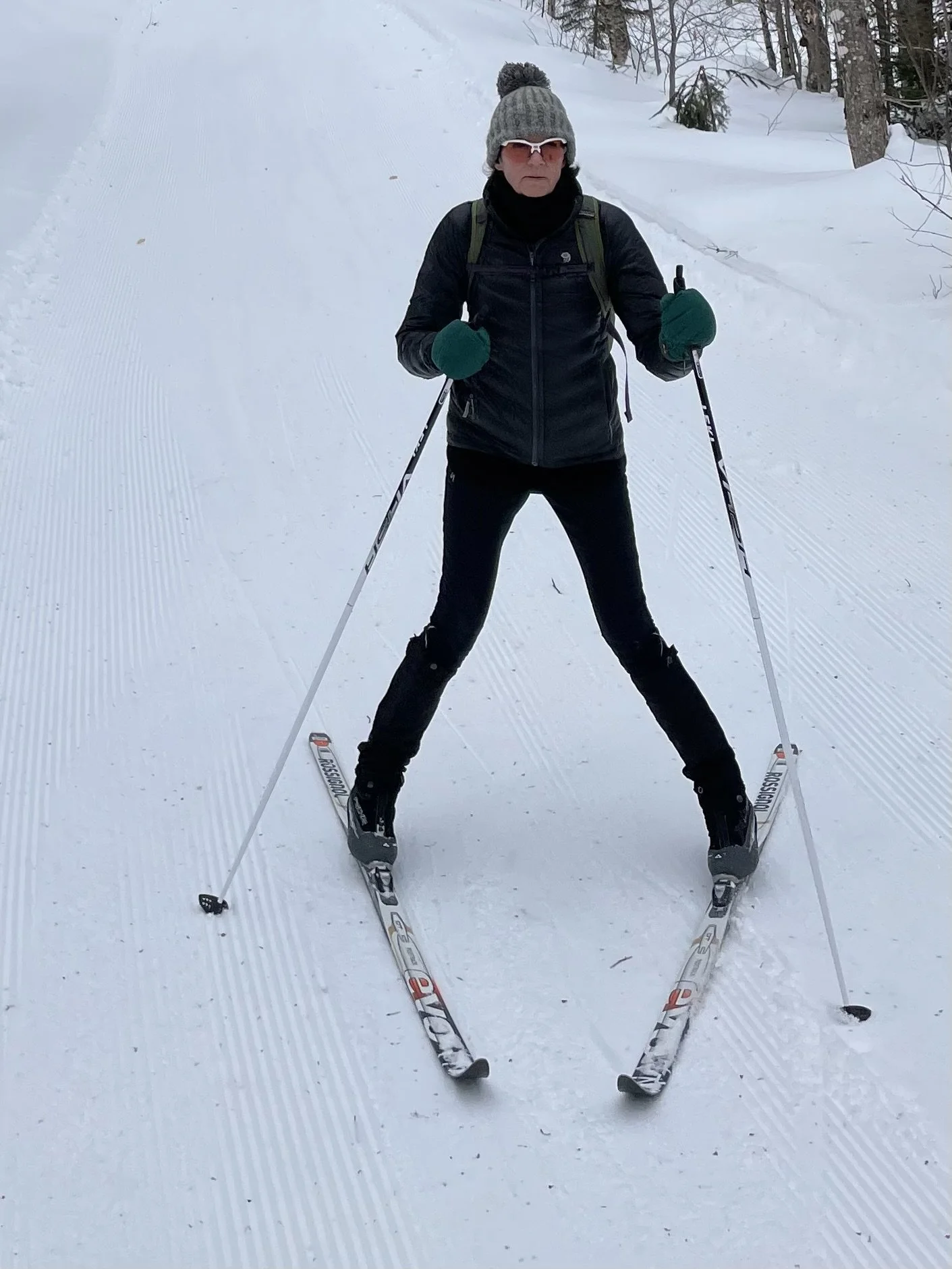
Brenda in good form snowplowing on the Mountain Road at Bretton Woods Nordic in NH
Finally, there’s the psychological aspect. You arrive at a steep downhill trail section after some pleasant rhythmic gliding through gently rolling woods. You freeze. What zen strategies do you use to get yourself safely downhill on skinny skis? Snowplowing is another thing to learn about and practice.
Guest author and banner photo at Trapp Family Lodge by Tamsin Venn, who published Atlantic Coastal Kayaker Magazine for 30 years. In winter she swaps out sea kayaks for skis, enjoying outdoor adventures in beautiful places. She is a freelance writer based in Ipswich, Mass.